Automated Frequency Coordination Workflow
The overall Automated Frequency
Coordination (AFC) geolocation workflow involves multiple RUCKUS components: the access point
(AP), Controller, Cloud Geolocator, and the mobile app version of the Controller.
RUCKUS employs a cloud-based architecture to deliver AFC support for its enterprise Wi-Fi APs. The RUCKUS cloud hosts an AFC Proxy Server and a Geolocation Service Server, both accessible only to registered RUCKUS client devices.
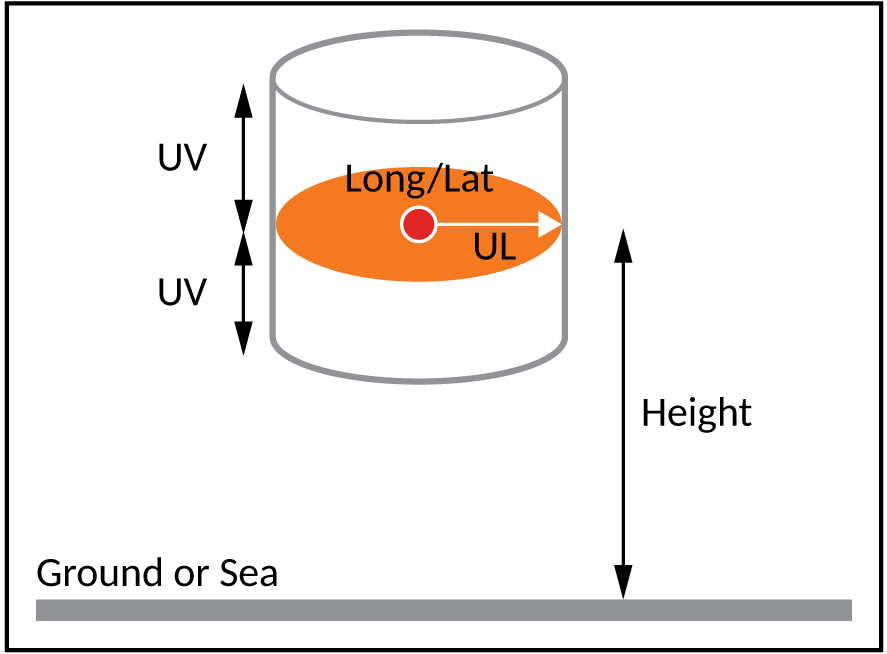
- Geolocation Determination: The AP first determines its precise geolocation coordinates, including latitude, longitude, height above ground level, and lateral and vertical uncertainty from the RUCKUS Geolocation Service Server.
- Forming the AFC Inquiry: Using its geolocation coordinates, the AP constructs an AFC inquiry. This inquiry includes essential details about its location.
- Passing to the AFC Proxy: The AP then forwards the AFC inquiry to the RUCKUS AFC Proxy Server.
- Relaying to External AFC Service: The AFC Proxy Server relays the AP inquiry to an external AFC service provider’s server for processing.
- Awaiting the Response: The AFC Proxy Server awaits the response from the external AFC service provider. Once received, it facilitates the return trip of the response back to the AP.
The APs communicate with the AFC Proxy Server and Geolocation Service Server through their respective AP controllers, not directly. RUCKUS has the following types of AP controllers: