Using MVR in a Multicast Television Application
In a multicast television application, a
PC or television with a set-top box can receive multicast streams. Multiple PCs or
set-top
boxes can be connected to one subscriber port, which is a switch port configured as
an MVR
receiver port (RP). When a subscriber selects a channel, the set-top box or PC sends
an IGMP
report to Switch A to join the appropriate multicast group. The switch modifies the
forwarding table to include this receiver port as a forwarding destination in the
MVLAN. An
uplink port that sends and receives multicast data to and from within the MVLAN is
called an
MVR source port (SP).
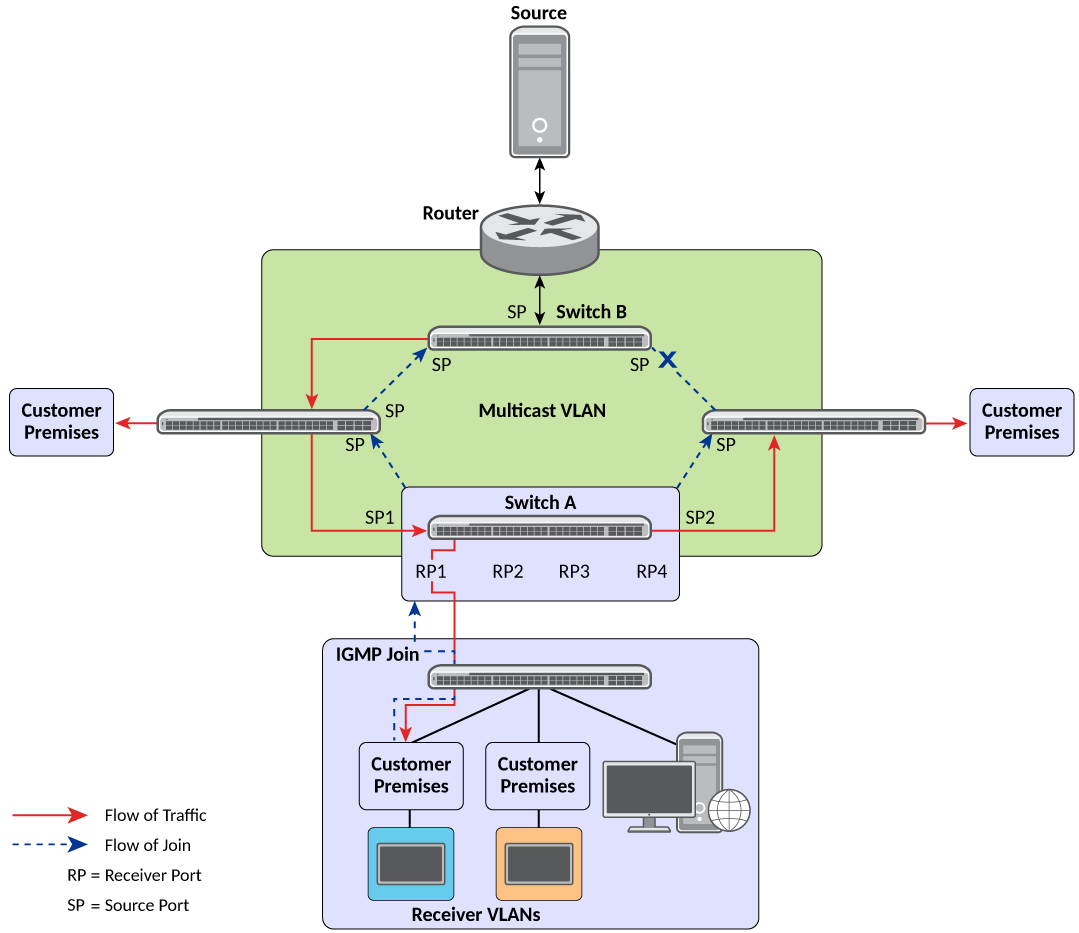
MVR eliminates the need to duplicate television-channel multicast traffic for subscribers in each VLAN. Multicast traffic for all channels is sent around the MVLAN only once. The receivers in the Receiver VLANs request multicast traffic in the MVLAN using IGMP Report/Leave messages on an on-demand basis. The access layer switch, Switch A in this example, modifies the forwarding behavior to allow the traffic to be forwarded from the MVLAN to the subscriber port in a different VLAN, selectively allowing traffic to cross between two VLANs.