DHCP Client as a New Device
When the DHCP client device boots up without an IP address with the Layer 2 switch software version, the client initiates DHCP discovery, which is a subnet-directed broadcast. Refer to "DHCP client in continuous discovery mode" for more information.
The DHCP discovery broadcast is received by the DHCP servers present in the network. There are three possible responses to this message:
If the client does not receive a DHCP Server response, the client continues to send DHCP discover packets until it gets a response from DHCP Server, or a static IP address is configured. The DHCP Client service or the DORA process runs by default on ICX devices if there is no static IP address configured on any of the interfaces of the device. If the client receives a response from the server (refer to "DORA process"), the client starts the DHCP request and obtains the IP address lease. If the client receives a response from more than one server, the client acknowledges the first response received, which is the default behavior.
When the DHCP client device boots up without any IP address, the client initiates the DHCP discovery on all ports. DHCP discovery packets are sent from all DHCP client-eligible ports in the device. The default discovery mechanism is similar to the switch version.
The following flowchart illustrates this discovery mechanism.
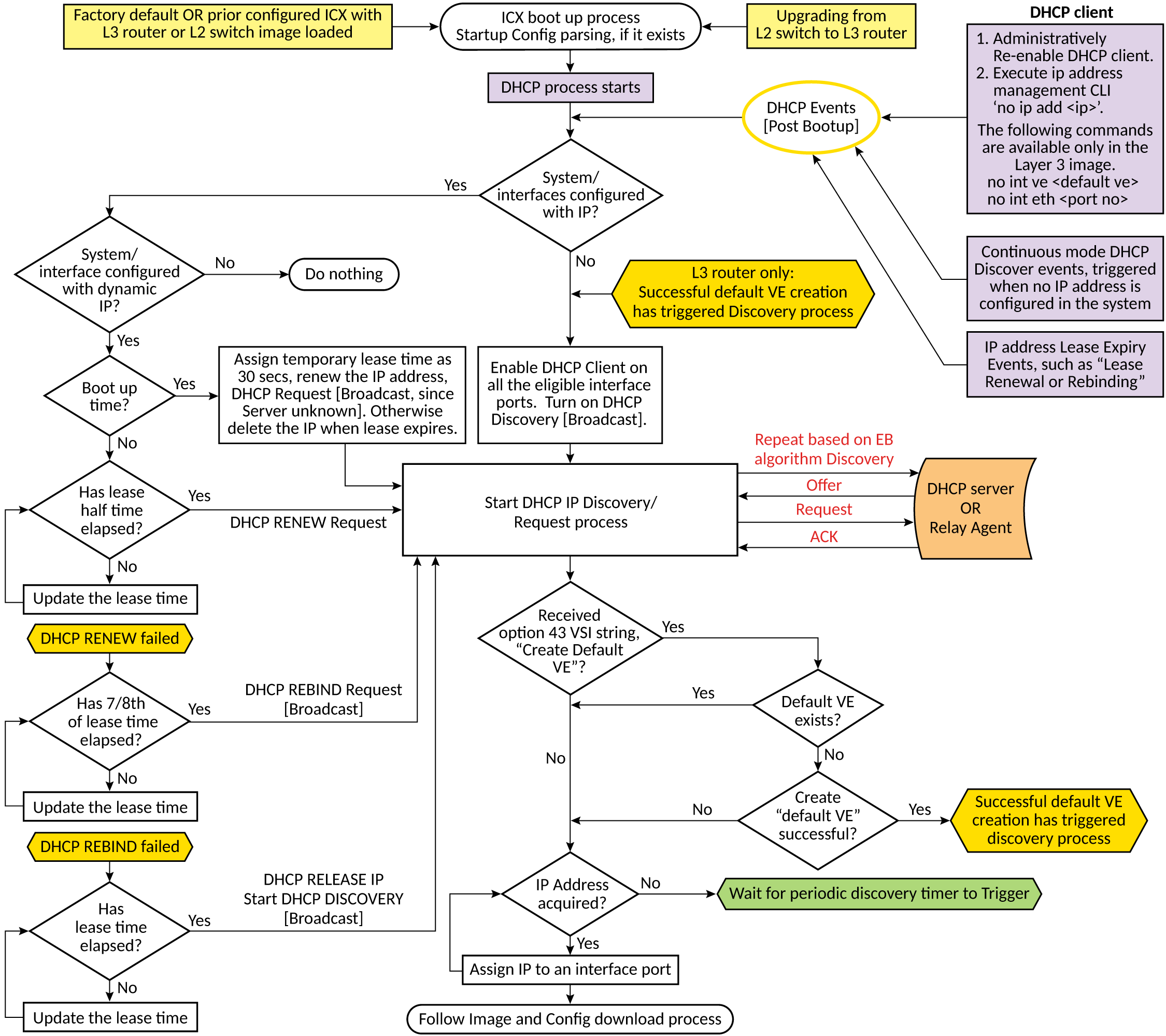
DHCP client behavior after reboot
If the DHCP client device reboots with a previously obtained IP address, the DHCP client sends the DHCP request packet, which is a subnet-directed broadcast packet from all the operationally up ports of the device. Once the DHCP server responds positively to the request, the previously obtained IP address is leased seamlessly. If the DHCP server responds in the negative, the previously obtained IP address will be released, and the DHCP process restarts.
If the software version is Layer 3, when the DHCP client comes up after a reboot with a previously obtained IP address, the DHCP client sends the DHCP request packets only on the ports where the DHCP client was enabled previously on the device.